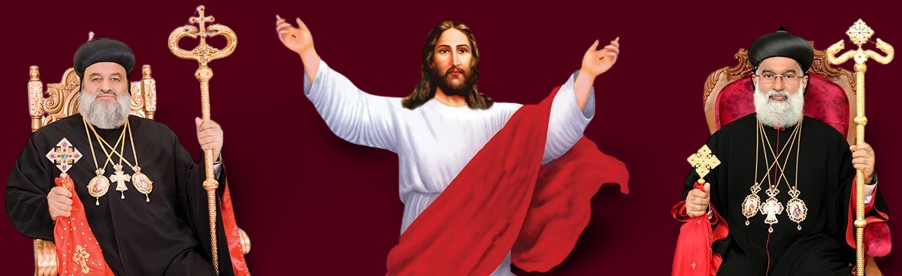
The Saints of Syriac Orthodox Church
Vist our dedicated Site for The Saints of Syriac Orthodox Church
www.oursaints.org
The Syriac Orthodox Church, also known as the Jacobite Syrian Church, stands as one of Christianity's oldest communities, rooted in the apostolic foundation of Antioch, where believers were first called Christians (Acts 11:26). Its rich theological, liturgical, and spiritual identity owes much to its revered Church Fathers, who shaped its miaphysite Christology—affirming Christ's one united divine-human nature—and preserved the Syriac language as a vibrant medium for faith. Living under Roman, Byzantine, and Sasanian rule, these luminaries defended Orthodoxy against heresies, nurtured ascetic communities, and crafted a liturgical tradition that endures in churches from Syria to the Malankara region of India. This essay explores the lives and contributions of key Syriac Fathers—Saint Ephrem the Syrian, Aphrahat the Persian Sage, Philoxenus of Mabbug, Jacob of Serugh, Severus of Antioch, and Mor Ya`qub Burdhono—alongside other figures, highlighting their enduring legacy in the Syriac Orthodox tradition.
Historical and Cultural Context
The Syriac Orthodox Church emerged in a region where Syriac, a dialect of Aramaic akin to Jesus' language, became the primary vehicle for theological expression. Centered in Antioch and Edessa, the Church faced significant challenges after the Council of Chalcedon (451 CE), which defined Christ as having two natures (dyophysite), a stance the Syriac Orthodox rejected as divisive, favoring the miaphysite doctrine of one united nature. This theological divide led to imperial persecution under Byzantine emperors, forcing the Church to navigate a complex landscape of Roman, Persian, and later Islamic rule. The Church Fathers, writing in Syriac, drew on a Semitic worldview rooted in biblical imagery, distinct from the Hellenistic influences of Western Christianity. Their works not only defended Orthodoxy but also enriched the Church's liturgy, asceticism, and cultural identity, ensuring its survival through centuries of adversity.
Saint Ephrem the Syrian: The Harp of the Holy Spirit
Saint Ephrem the Syrian (c. 306–373), born in Nisibis, is celebrated as the "Harp of the Holy Spirit" for his poetic and theological brilliance. Serving as a deacon in Nisibis and later Edessa, Ephrem produced hymns (madrashe), metrical homilies (memre), and prose commentaries that blended artistry with doctrine. His *Hymns on the Nativity* and *Hymns on the Resurrection* celebrate the Incarnation and Christ's victory over death, using vivid imagery like the "Pearl" to affirm miaphysite Christology against Arian and Nestorian heresies. His *Hymns Against Heresies* countered false teachings with scriptural metaphors, while his *Hymns on Paradise* explored eschatological hope, depicting a restored Eden. Ephrem's *Commentary on the Diatessaron*, a harmonized Gospel, reveals his exegetical depth, interpreting Scripture typologically. His hymns, still sung in Syriac liturgies, elevated the Syriac language as a literary medium, influencing Greek and Latin traditions. Named a Doctor of the Church in 1920, Ephrem remains a spiritual cornerstone for the Syriac Orthodox, his words resonating in worship worldwide.
Philoxenus of Mabbug: Champion of Miaphysite Orthodoxy
Philoxenus of Mabbug (c. 440–523), born in Persia, was a fierce defender of miaphysite Christology during the post-Chalcedonian controversies. Educated at the School of Edessa, he became bishop of Mabbug around 485, using his position to articulate the Church's rejection of Chalcedon's two-nature doctrine. His *Discourses on Christian Life* emphasize the transformative power of the Eucharist and baptism, portraying them as participation in Christ's divine-human nature. His *Commentary on the Gospel of John* and polemical letters argue that Chalcedon's formula risks dividing Christ's person. Philoxenus commissioned the Philoxenian version of the Syriac New Testament, enhancing liturgical accessibility. Exiled in 518 under Emperor Justin I for his anti-Chalcedonian stance, he continued writing, urging his flock to remain steadfast. His letters from exile blend theological rigor with pastoral care, making him a model of resilience. Philoxenus's contributions to biblical translation and miaphysite theology strengthened the Church's doctrinal and liturgical heritage, leaving a lasting impact on its worship practices.
Jacob of Serugh: The Poetic Voice of the People
Jacob of Serugh (c. 451–521), dubbed the "Flute of the Holy Spirit," was a prolific poet and bishop whose metrical homilies made theology accessible to ordinary believers. Born in Kurtam, he studied at Edessa before serving as bishop of Serugh. His corpus of over 700 homilies, with around 400 surviving, covers biblical narratives, saints' lives, and liturgical themes. Written in a twelve-syllable meter, his *Homilies on the Nativity* and *Homilies on the Virgin Mary* portray Mary as the Theotokos, aligning with miaphysite Christology. His *Homilies on the Passion* highlight Christ's human suffering, inviting contemplation of the cross. Jacob's irenic style, unlike Philoxenus's polemics, focused on edification, using vivid storytelling to bridge scholarly theology and popular piety. His homilies, recited in churches and monasteries, remain integral to the Syriac liturgy, particularly during Christmas and Easter, fostering a deep spiritual connection among the faithful.
Severus of Antioch: The Patriarchal Theologian
Severus of Antioch (c. 465–538), patriarch from 512 to 518, was a towering intellectual whose theological precision shaped Syriac Orthodox Christology. Born in Sozopolis and educated in Alexandria and Beirut, Severus embraced miaphysitism, rejecting Chalcedon's two-nature formula as Nestorian-leaning. His *Cathedral Homilies* and *Philalethes* (Lover of Truth) articulate the unity of Christ's nature, while his *Odes to the Saints* enriched Syriac worship. Exiled in 518 for his anti-Chalcedonian stance, Severus continued writing from Egypt, guiding the miaphysite community through correspondence. His works defended Orthodoxy against both Nestorian and Chalcedonian opponents, emphasizing the sacramental implications of Christ's unified nature. Severus's leadership and liturgical contributions cemented his status as a cornerstone of the Syriac Orthodox tradition, influencing its doctrinal stance and worship practices.
Mor Ya`qub Burdhono: The Sculptor of the Church
Mor Ya`qub Burdhono (Jacob Baradaeus, c. 500–578), known as the "Sculptor of the Syrian Orthodox Church," was pivotal in preserving the miaphysite tradition during intense post-Chalcedonian persecution. Born in Tella, he embraced monasticism at Phasilta, adopting a ragged robe that earned him the name "Baradaeus" (coarse garment). Consecrated bishop of Edessa in 543 under Empress Theodora's patronage, Ya`qub embarked on a three-decade mission across Syria, Mesopotamia, Egypt, and Armenia. Disguised as a wandering monk, he ordained over 100 priests and 27 bishops, rebuilding the suppressed miaphysite hierarchy. His clandestine ordinations, often in caves, ensured apostolic succession. His sermons and letters urged unity and fidelity to Orthodoxy, echoing Severus's theology. Despite arrests and exile, Ya`qub's efforts revitalized the Church, enabling its survival into the Islamic era. Celebrated on July 30, his legacy as the namesake of the Jacobite Syrian Church endures in global liturgies, symbolizing resilience and devotion.
Other Notable Syriac Fathers
Beyond these luminaries, other Syriac Fathers enriched the tradition. Isaac of Nineveh (c. 613–700), a mystic, authored *Ascetical Homilies* emphasizing divine love and repentance, influencing both Eastern and Western spirituality. Bar Hebraeus (1226–1286), a polymath maphrian, wrote the *Book of the Dove* and *Ecclesiastical History*, preserving Syriac learning during the Mongol era. Marutha of Maipherqat (d. c. 420) contributed to liturgical development and martyr traditions, strengthening communal identity. These figures complemented the foundational work of earlier Fathers, ensuring the Church's intellectual and spiritual vitality.
Theological and Liturgical Contributions
The Syriac Fathers collectively upheld miaphysite Christology, defending Christ's one united nature against Arian, Nestorian, and Chalcedonian challenges. Their writings emphasize the Incarnation as the central mystery of salvation, with the Eucharist and baptism as means of deification. Asceticism, rooted in the "sons of the covenant," fostered a spirituality of humility and service. Their use of Syriac preserved a distinct Christian identity, while their biblical exegesis, grounded in Semitic traditions, offered a unique perspective within global Christianity. Ephrem's hymns, Jacob's homilies, and Severus's odes remain integral to the West Syriac Rite, making theology accessible through poetry and liturgy.
Enduring Legacy
The Syriac Orthodox Church, with communities in the Middle East, India, and the diaspora, continues to draw on its Fathers' legacy. Ephrem's hymns are sung in liturgies, Philoxenus's translations underpin Scripture readings, and Ya`qub's ordinations ensure apostolic continuity. In seminaries, their texts guide theological education, while in churches like those in Malankara, their teachings inspire faith and cultural pride. Facing modern challenges like geopolitical strife and ecumenical dialogues, the Church finds strength in these Fathers, whose wisdom remains a beacon of resilience, devotion, and Orthodoxy.