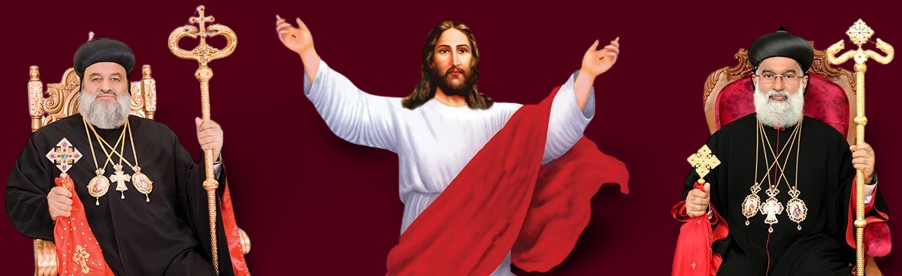
His Holiness Patriarch Mor Ignatius Aphrem II
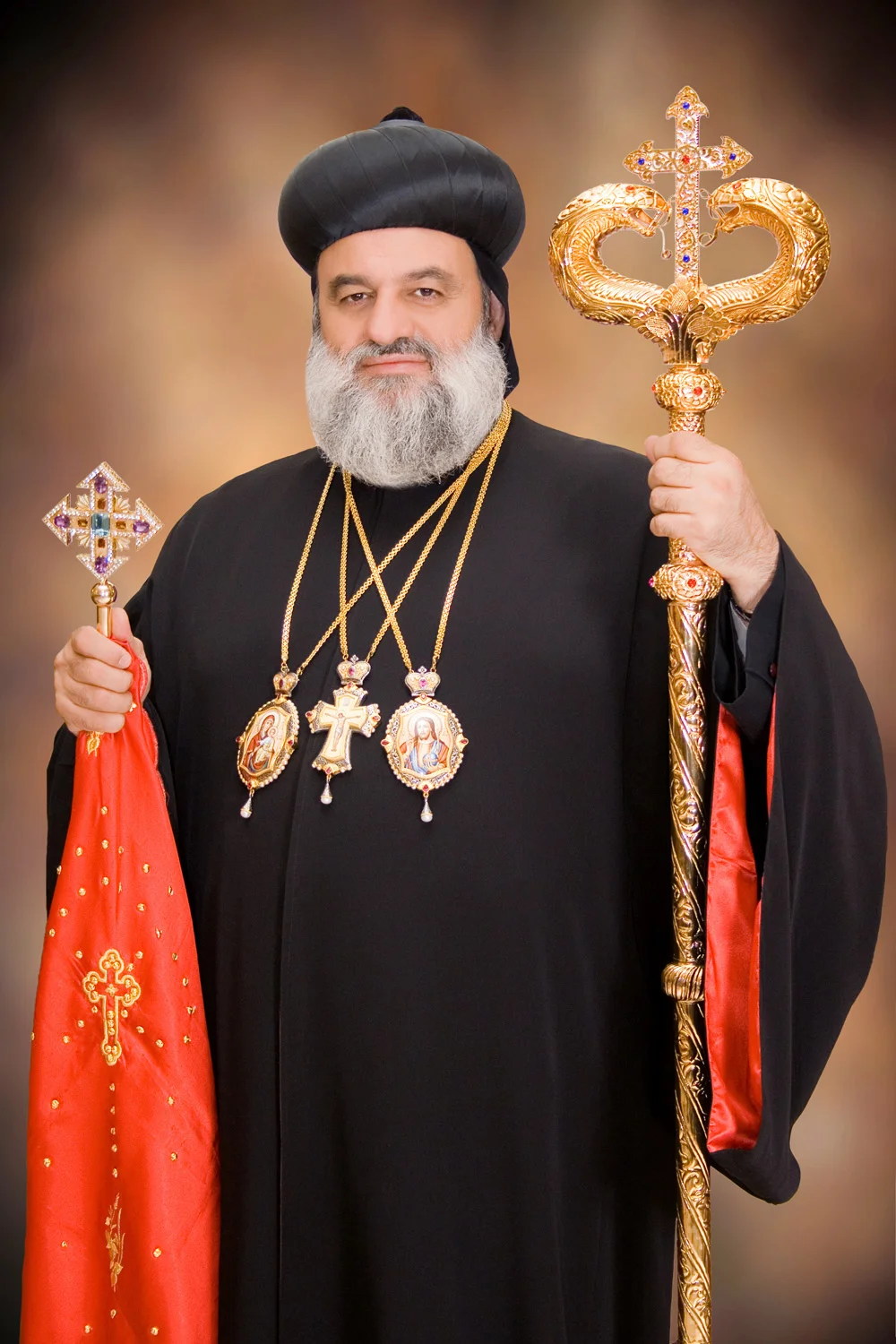
123rd Patriarch of Antioch and All the East
Supreme Head of the Universal Syriac Orthodox Church
Elected: March 31, 2014 | Enthroned: May 29, 2014
His Holiness Patriarch Mor Ignatius Aphrem II is the 123rd successor of St. Peter in the Apostolic See of Antioch and the Supreme Head of the Universal Syriac Orthodox Church. Born in Qamishli, Syria, on May 3, 1965, he has dedicated his life to the service of the Church through theological education, pastoral ministry, and ecumenical engagement across the globe.
Early Life and Formation
Moran Mor Ignatius Aphrem II was born as the youngest child of Issa and Khanema Karim. He lost his father at an early age and was raised by his mother. After completing his primary schooling in Qamishli, he entered St. Ephrem's Theological Seminary in Atchaneh, Lebanon, in 1977, beginning his journey toward priesthood and theological scholarship.
Starting in 1982, the young Aphrem served at the Syriac Orthodox Archdiocese of Aleppo, Syria, for two years under the guidance of His Eminence Mor Gregorios Yuhanna Ibrahim, gaining valuable pastoral experience.
Education and Theological Studies
From 1984 to 1988, he pursued his theological studies at the Coptic Theological Seminary in Cairo, graduating with a Bachelor of Divinity degree. This period was marked by his deepening commitment to monastic life—in 1985, he took the vows of a monk, submitting himself to the service of the Church, and was ordained to the diaconate in Egypt and later that same year to the sacred priesthood in Qamishli.
Advanced Academic Achievements
1991-1992: License of Sacred Theology, St. Patrick's College, Maynooth, Ireland
1994: Doctor of Divinity Degree - Doctoral thesis on "Symbolism of the Cross in Early Syriac Christianity"
2013: Enrolled at Fordham University, New York, for PhD in Religious Education
From 1988 to 1989, the monk-priest Aphrem served as both secretary to the late Patriarch Mor Ignatius Zakka I Iwas and as a teacher at St. Ephrem Theological Seminary in Damascus, Syria. During his studies in Ireland, he also served as vicar of the Syriac Orthodox Church in London, balancing academic pursuits with pastoral responsibilities.
Episcopal Ministry in the United States
On Sunday, January 28, 1996, the monk-priest Aphrem was consecrated as Archbishop under the episcopal name 'Mor Cyril' and became the Patriarchal Vicar of the Archdiocese of the Syriac Orthodox Church for the Eastern USA. He arrived in the United States of America on March 2, 1996, and was officially installed to his position at St. Mark's Cathedral in Teaneck, New Jersey.
As Archbishop, within his first year, he gathered the youth of the archdiocese and was instrumental in establishing programs that would serve students and young adults. During his tenure, he established numerous new parishes across the United States in Washington DC, Florida, New Jersey, Atlanta, Indiana, Virginia, and Texas, demonstrating remarkable pastoral vision and organizational ability.
Ecumenical Leadership
Mor Cyril established himself as a dedicated ecumenist, deeply concerned about Christian Unity. His ecumenical service includes:
- Service on the Executive and Central Committees of the World Council of Churches
- Attendance at WCC General Assemblies in Canberra, Australia (1991), Harare, Zimbabwe (1998), and Porto Alegre, Brazil (2006)
- Active membership on the Executive and Governing Boards of the National Council of Churches of Christ in the USA
- Service as Vice-Chairman of the Standing Conference of the Oriental Orthodox Churches in America
- Key role in establishing Christian Churches Together in the USA, a promising ecumenical body of which the Syriac Orthodox Church is a founding member
Election as Patriarch
Following the passing away of Patriarch Mor Ignatius Zakka I Iwas on March 21, 2014, the Holy Synod of the Syriac Orthodox Church of Antioch convened on March 31, 2014. The Fathers of the Synod elected Mor Cyril Aphrem as Patriarch of Antioch and All the East and Supreme Head of the Universal Syriac Orthodox Church, giving him the name Mor Ignatius Aphrem II. He became the 123rd successor of St. Peter in the Apostolic See of Antioch and was enthroned in Damascus, Syria, on May 29, 2014.
Synodal and Liturgical Leadership
Following his enthronement, His Holiness presided over a universal synod which included His Beatitude Catholicos Mor Baselius Thomas I and the archbishops and metropolitans of the Universal Syriac Orthodox Church, fostering church-wide unity and collaboration.
Holy Myron Consecration - June 2015
In June 2015, His Holiness presided over the Holy Synod at Mor Aphrem Monastery in Maarat Saydnaya, Syria. During this historic gathering, he consecrated the Holy Myron on the occasion of the centennial of the Syriac Genocide Sayfo, reinforcing liturgical traditions and commemorating the martyrs of the faith.
Ministry During Crisis
His Holiness has demonstrated extraordinary pastoral courage by serving persecuted Christian communities during some of the most difficult periods in recent Middle Eastern history. He has conducted liturgies in refugee camps like Shaqlawa amid ISIS advances and the Syrian Civil War, providing spiritual comfort and support to displaced families.
His visits to conflict zones in Syria and Iraq, including areas where Christians faced persecution and displacement, have been a source of immense encouragement to faithful communities struggling to maintain their presence in their ancestral homelands.
Cultural and Community Initiatives
Syriac Cultural Center - July 2025
His Holiness inaugurated the Syriac Cultural Center in Homs, Syria, to preserve the rich heritage of the Syriac Orthodox Church amid regional challenges. This center serves as a beacon of cultural continuity and identity for the Syriac Christian community.
His Holiness has advocated for church neutrality on ethnic labels, promoting unity under the term "Suryoye" to avoid political divisions between Assyrian and Aramean identifications. This approach emphasizes the spiritual and ecclesiastical unity of all members of the Syriac Orthodox Church regardless of ethnic self-identification.
Administrative Vision
Throughout his ministry, His Holiness has emphasized pastoral resilience and church growth through:
- Strengthening diocesan structures worldwide
- Establishing advisory councils for better church governance
- Creating youth organizations and Sunday school programs
- Promoting pre-marriage counseling and family ministries
- Recognizing and honoring elderly members through special liturgies
- Supporting scholarship programs for students
- Encouraging the preservation of Aramaic roots and Syriac liturgical heritage
Theological Emphasis
His Holiness's tenure emphasizes adherence to the apostolic faith through his Omologia, a personal faith declaration that he signed and archived. This document reinforces doctrinal fidelity to the ancient traditions of the Syriac Orthodox Church and the decisions of the first three Ecumenical Councils.
He has consistently promoted the universality of the Syriac Orthodox Church, ensuring that the faithful across continents—from the Middle East to India, from Europe to the Americas—remain united in faith, liturgy, and ecclesiastical structure under the Apostolic See of Antioch.
Current Ministry
As of 2025, His Holiness continues his apostolic mission, traveling extensively to visit parishes, consecrate churches, and meet with religious and political leaders. In October 2025, he attended a Holy Liturgy celebrating a sainthood declaration, demonstrating the Church's ongoing commitment to recognizing holiness and maintaining its spiritual traditions.
His Holiness resides in Damascus, Syria, at the Patriarchal headquarters, from where he guides approximately twenty-six archdioceses and eleven Patriarchal Vicariates worldwide. Under his leadership, the Syriac Orthodox Church continues to grow and serve its faithful despite unprecedented challenges in the Middle East and the demands of ministry to a global diaspora.
A Shepherd for Difficult Times
His Holiness Patriarch Mor Ignatius Aphrem II has proven to be a shepherd who leads from the front, visiting dangerous areas, standing with persecuted communities, and tirelessly advocating for peace, justice, and the preservation of Christian presence in the Middle East. His scholarly background, pastoral heart, and ecumenical vision continue to guide the Syriac Orthodox Church in the 21st century.